
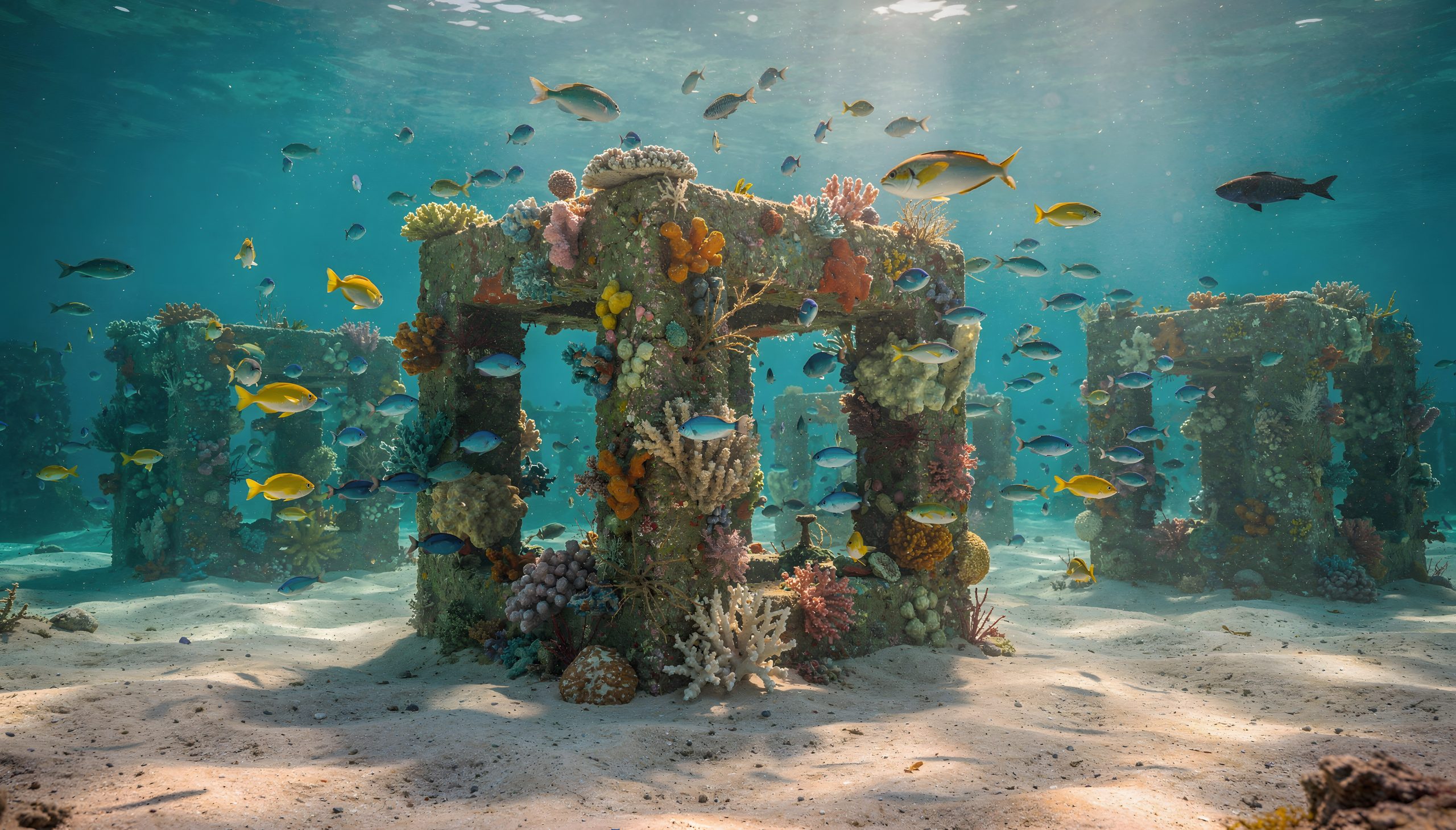
EXPLORING ARITICIAL REEFS
Artificial reefs are structures placed on the ocean floor to create habitat for marine life.
They are designed to mimic natural rocky reefs that many species depend on for shelter, feeding, and spawning.Artificial reefs can be created using materials such as specially designed concrete modules, rock structures, or carefully prepared ships and offshore structures. Over time, algae, invertebrates, and corals begin to grow on these surfaces, attracting small fish and eventually larger species.
These structures can provide habitat for species that prefer complex rocky environments, including rockfish, lingcod, and many other reef-associated fish found along the Pacific coast.
Artificial reefs may help:
- Provide shelter for juvenile fish
- Increase habitat complexity on sandy bottoms
- Support reef-associated species such as rockfish and lingcod
- Create areas for marine organisms to grow and reproduce
Scientists continue studying artificial reefs to better understand how they influence marine ecosystems and fish populations. While reefs can provide habitat, researchers also evaluate how they affect fish behavior, recruitment, and long-term ecosystem balance.
As part of its mission to promote ocean education and fisheries stewardship, OCEAN is exploring ideas like artificial reefs as potential tools to support marine habitat and sustainable fisheries.
Learn more:
Read additional information about artificial reefs from NOAA.org